
18.3.2026
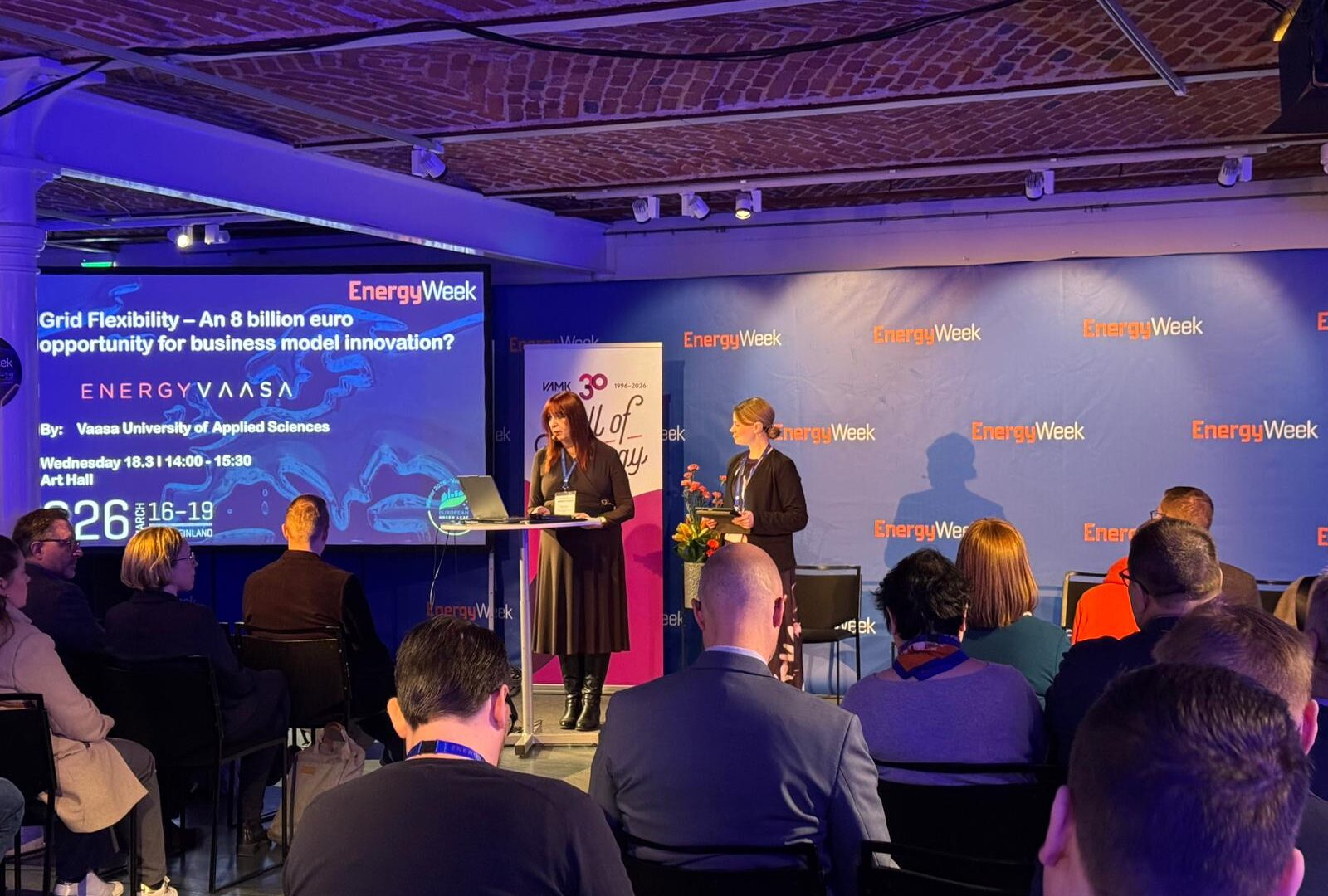
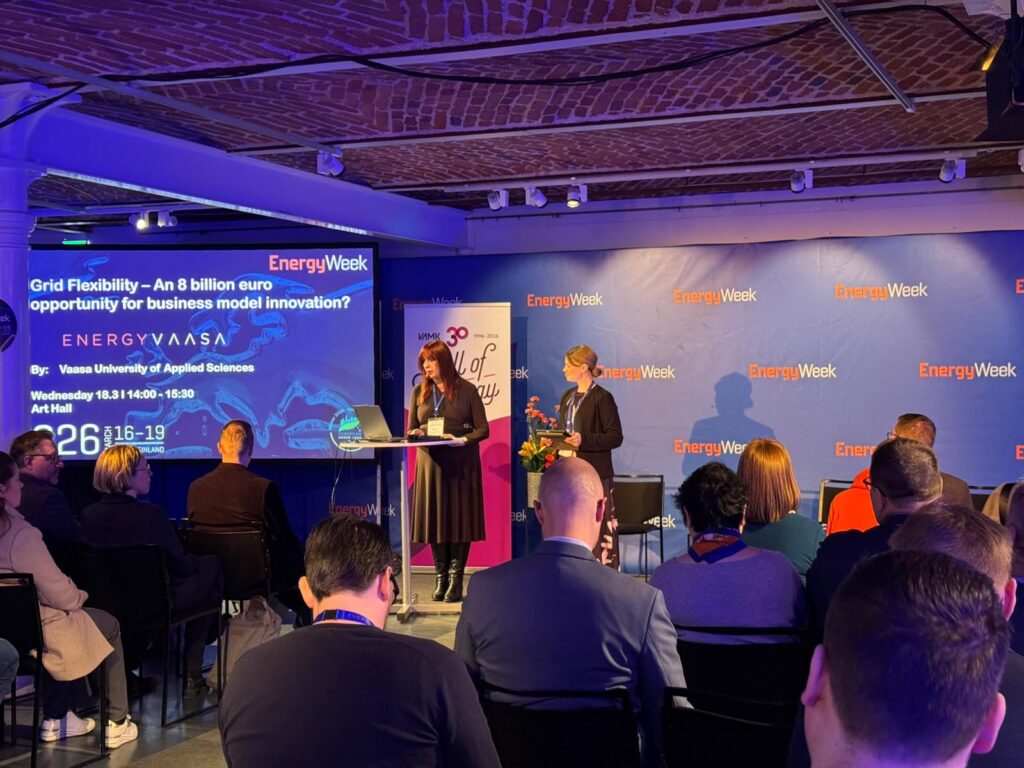
As Europe’s energy system undergoes a historic transformation, one concept is rapidly moving from technical jargon to strategic priority: grid flexibility. This was the central theme of a recent seminar held as part of the Competence for energy transition management -project during Energy Week on the 18th of March 2026.
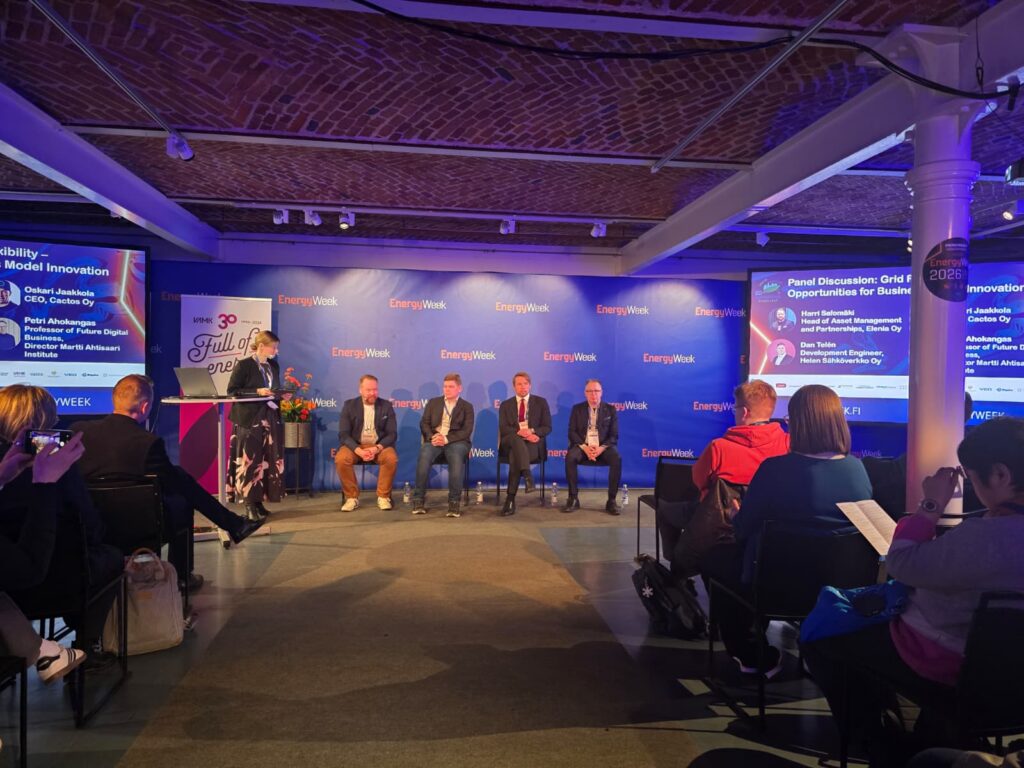
Hosted by Vaasa University of Applied Sciences (VAMK) and moderated by Kaisa Penttilä, the session brought together experts from academia and industry to explore a key question: How can grid flexibility unlock new business opportunities while enabling the energy transition?
Below you can find the presentations of the session:
- DSO perspective on grid flexibility, Harri Salomäki, Head of Asset Management and Partnerships, Elenia Oy
- Local market platforms for grid flexibility: Case FinFlex, Dan Telén, Development Engineer, Helen Sähköverkko Oy
- How do Batteries and AI bring solutions to the flexibility of the grid? Oskari Jaakkola, CEO, Cactos Oy
- Disruptive business models for grid flexibility in future energy systems, Petri Ahokangas, Professor of Future Digital Business, Director Martti Ahtisaari Institute
The context: A system under pressure – and the opportunity to find solutions
The energy landscape is evolving at an unprecedented pace. The rapid growth of renewable energy, electrification of transport and heating, and the rise of energy-intensive industries such as data centers are all placing new demands on electricity networks. At the heart of this transformation lies grid flexibility—the ability to dynamically balance electricity supply and demand.
Finland’s electricity grids are globally recognized for their reliability. However, even robust systems now face increasing pressure. Both transmission and distribution networks must expand and adapt quickly to accommodate fluctuating energy flows and growing consumption. The key takeaway that was communicated during the session: decisions made in the coming years will determine whether grids become bottlenecks – or enablers – of sustainable growth.
Insights from industry experts and academia
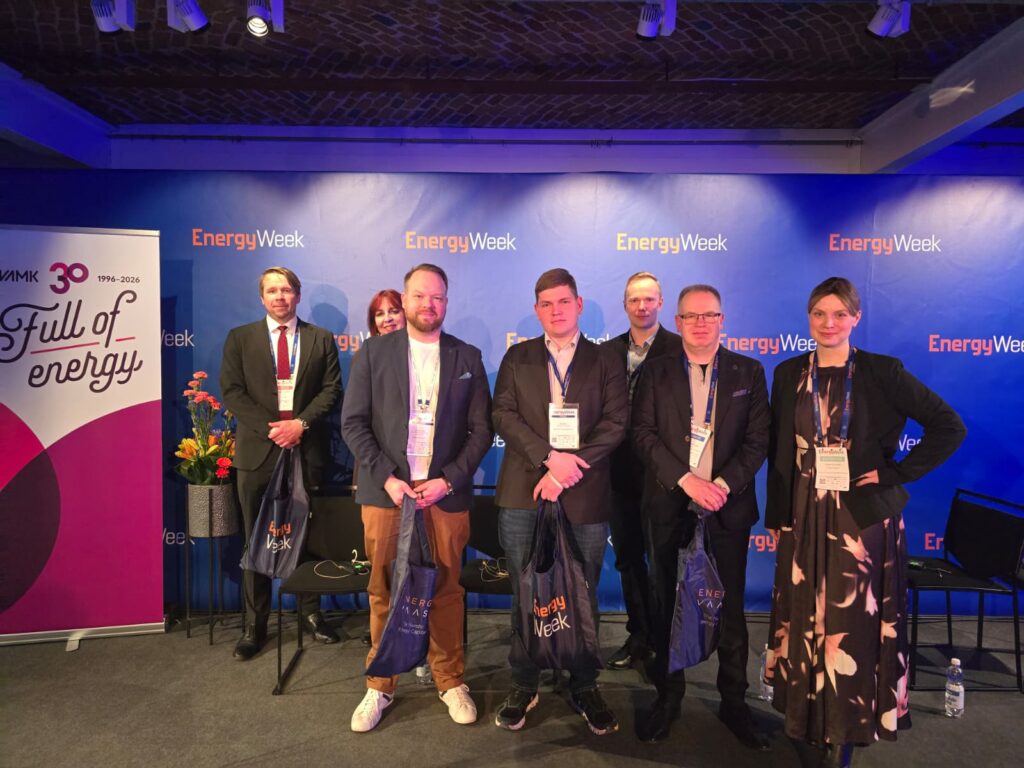
The seminar featured four keynote speakers, each offering a unique perspective on the challenges and opportunities of grid flexibility:
Harri Salomäki (Elenia Oy) highlighted the realities faced by distribution system operators (DSOs), emphasizing the urgent need for both new flexibility services and smarter management of the existing grid. Security of supply is a priority and can’t be compromised. This brings opportunities for service providers who can bring solutions that are win-win for both energy buyers and grid operators. Needs are, however, local and especially different sized DSOs need tailor made solutions.
Dan Telén (Helen Sähköverkko Oy) presented the FinFlex pilot, a local flexibility market platform developed in collaboration with Fingrid. The initiative demonstrates how market-based mechanisms can help alleviate grid congestion at the distribution level. The pilot serves as a launching pad for a national market-based flexibility solution, which is also in line with regulatory development coming from the EU. The pilot is also connected to the Network Code on Demand Response -regulatory framework pawing the way for an EU wide harmonization of rules for demand-side flexibility.
Oskari Jaakkola (Cactos Oy) explored how battery storage and AI-driven solutions already provide flexibility services, tapping the growing market needs both behind and in front of the meter. The presentation highlighted that the solutions needed are already available to tackle the congestion challenges of the medium voltage (MV) grid as well. However, both DSOs and energy buyers need to become active in identifying and deploying the solutions and realizing the value potential. Business models capturing value traditionally through peak shaving mechanisms could be extended with services supporting the mV grid through demand response.
Professor Petri Ahokangas (University of Oulu) challenged conventional thinking by focusing on disruptive business models and the importance of monetizing flexibility in entirely new ways. Especially DSOs could have the potential to utilize their central role in the energy system to develop platform-based business models. This requires a substantial rethinking of the role and possibilities of DSOs, which will require strong collaboration across the energy ecosystem, not least from the regulation side.
Together, these perspectives painted a clear picture: grid flexibility is not just a technical necessity – it is a rapidly emerging market, where there is still substantial room for business model innovation.
What happens next?
The seminar concluded with a panel discussion focused on one critical question: How do we accelerate progress? The discussion highlighted some crucial issues to be resolved and pointed out the most feasible development directions to focus upon:
Align incentives to support flexibility solutions: A stable grid is for the benefit of all actors and a national competitive edge that needs to be invested in. Although politically a sensitive subject, rising costs will be seen in the future and need to be accepted.
Act quickly – before grid limitations slow down investments: Win-win-win solutions can be found, but different ecosystem actors need to collaborate and be proactive. This is also a culture issue both within different organizations and on the national level. A sense of urgency needs to sweep through all stakeholders, it should not just be a driver of the pioneers.
Encourage bold experimentation and partnerships: The market is still emerging, and the winning business models have not been confirmed. Bold experimentation and forging new partnerships are thus called for. Grid operators, electricity users and producers, as well as service providers need to work together to find the best local solutions. Regulation should not disincentivize development but enable it.
Scale successful pilots into broader markets: Stakeholders in the Finnish energy industry are already doing a lot well. There is much that we do here that could be brought to the EU markets. Especially service providers have the chance to use experiences gained at home to scale up their business abroad and extend their markets.
Continuing the conversation
Grid flexibility is no longer a future concept – it is a present-day necessity and a major business opportunity. The Competence for energy transition management -project will continue to explore these themes, educating also the next generation of energy professionals by bringing together the most recent expertise from industry, academia, and policy. If you have ideas, projects, or solutions related to grid flexibility, we encourage you to join the conversation and be in contact for future collaboration opportunities: Ota yhteyttä – Energiamurroksen johtaminen.